

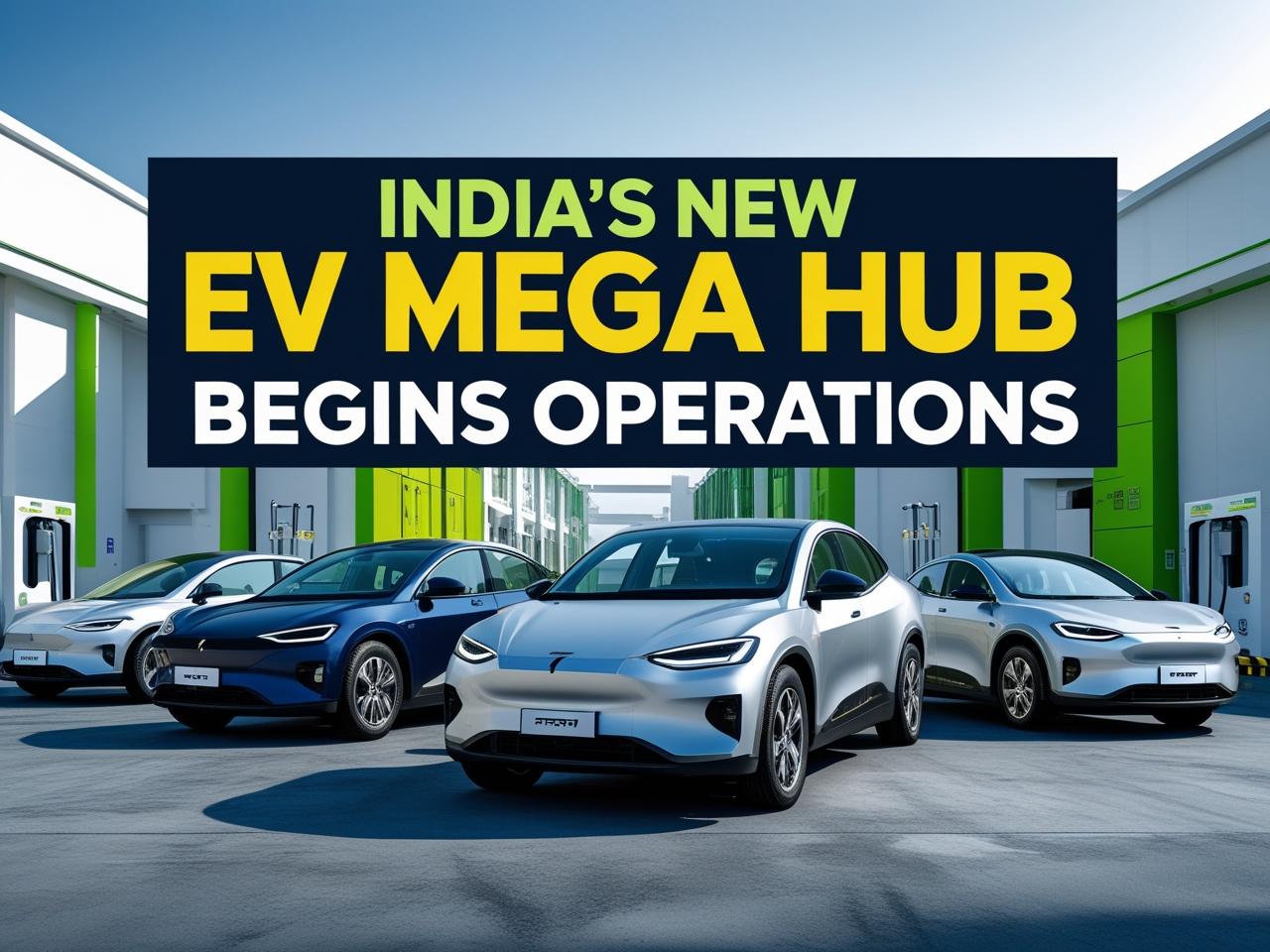
India has officially welcomed the largest EV plant in India. In 2025, VinFast EV India began operations at a sprawling 400-acre facility in Tuticorin, Tamil Nadu. This is not just another factory—it is India’s boldest bet on electric mobility yet. As concerns over climate change and urban pollution grow, this factory promises to galvanize EV startups in India, catalyze policy change, and inspire manufacturing ecosystems nationwide.
Within just a year of signing the Memorandum of Understanding (MoU) with the Tamil Nadu government, VinFast installed its assembly lines for the VF 6 and VF 7 electric SUVs. This rapid setup makes it one of the fastest large-scale manufacturing projects in India’s history.
Origins of VinFast EV India’s Tuticorin Project
VinFast, originally founded in Vietnam in 2017, rose fast to prominence with sleek electric cars and advanced battery tech. In early 2024, it chose Tuticorin an emerging industrial hub on India’s southeast coast for its first international EV manufacturing plant. Under Chief Minister M.K. Stalin’s leadership, the government allocated land, offered policy support on local sourcing, and facilitated fast-track permissions.
By mid‑2025, the largest EV plant in India was operational, reflecting close coordination between the company and local authorities.
Size, Capacity, and Industry Impact
Spanning nearly 400 acres, this VinFast facility is capable of producing up to 150,000 electric vehicles annually at full scale. The first production phase, with a ₹4,000 crore investment, targets 50,000 vehicles per year. By 2028, the full facility is expected to occupy ₹16,000 crore ($2 billion) investment and employ 3,500 direct staff and thousands more via vendors and suppliers.
India’s EV industry is structured to benefit: component makers, logistics providers, software teams, and engineering design firms are all lining up to serve this plant.
Economic Effects & Jobs
Tuticorin has quickly become a local economic engine. Over 85% of the plant’s employees are recruited from regional talent pools. Key roles included go‑trainers, EV technicians, battery assembly teams, quality control operators, and logistics coordinators.
The spillover effect is real: nearby cities now host automotive training centers, EV service units, and supply chain clusters. Analysts estimate close to 12,000 ancillary jobs will emerge within two years—double the size of the factory’s direct staff.
Turnover, Investment, and Future Growth
VinFast EV India expects its overall yearly production to be valued at nearly ₹10,000 crore ($1.2 billion) once full-scale production begins. The strategy is clear: begin with semi-knock down (CKD) kits, gradually shift to full local assembly, and move toward component manufacturing and battery modules inside India.
The plant, while not yet eligible for central EV incentives due to current investment thresholds, plans to qualify in later phases under India’s Production-Linked Incentive (PLI) scheme after reaching necessary capital levels.
Supply Chain & Vendor Ecosystem
This EV plant is fueling a scale-up of India’s suppliers. Facilities for battery packs, EV motors, power electronics, and onboard software are now being established within Tamil Nadu and Andhra Pradesh. Firms that produce lightweight chassis, sensors, and infotainment systems are actively onboarding as suppliers.
Several state industrial parks are remodelling their layouts to support EV suppliers, and tech institutes are training students in EV servicing and battery maintenance.
Sector Benefits and Wider Implications
The Tuticorin plant has become a beacon. Tamil Nadu cements its leadership in India’s auto manufacturing with hosts like Renault, Ashok Leyland, Hyundai and now VinFast. This plant also sets a precedent for foreign EV companies to invest in India, especially as policy clarity grows for production and exports.
This facility will help India move from being a country of EV consumers to one of global EV manufacturers. Industry watchers see future exports to ASEAN markets as early as 2026, enhancing India’s geopolitical and economic footprint.
FAQs
What makes this VinFast plant “the largest EV plant in India”?
Its 400-acre footprint and planned capacity of 150,000 EVs per year make it unmatched in scale among Indian EV plants in 2025.
What vehicle models will be produced at this plant?
Initially VF 6 and VF 7 electric SUVs via CKD kits. Over time, VinFast plans to fully localize manufacturing and introduce new EV lines suited to Indian consumers.
What is the total investment and projected revenue?
VinFast EV India has committed ₹16,000 crore ($2 billion). Expected annual revenue is projected at ₹10,000 crore once the plant reaches full capacity.
How many jobs will the plant generate?
Approximately 3,500 direct jobs, with over 12,000 indirect jobs through suppliers and support services in regional industrial clusters.
Will the plant helped India qualify for central EV incentives?
Not yet. To qualify for the full central PLI scheme, VinFast must make additional investments beyond the first phase threshold.
The launch of VinFast EV India’s Tuticorin plant represents a watershed moment for EV startups in India, Indian manufacturing and global environmental impact. It is clear evidence of how quickly foreign companies can set up high-scale operations in India with strong government collaboration. This facility is not just a factory but a flagbearer of India’s future as a global EV manufacturing powerhouse.
For more insights on India’s irreversible shift toward sustainable mobility and innovation, see our post on India’s Top 10 Startup Ecosystem States and stay connected with BestStartup.in for exclusive updates on the future of EV plant projects and AI startup growth.