
The Signal in the Noise
If you have been tracking the Indian tech ecosystem lately then you know the noise level is deafening. Every day brings a new LLM or a new “Copilot for X” or a new valuation that makes your eyebrows hit your hairline. But on November 25, 2025, amidst the noise, we got a signal. A massive one.
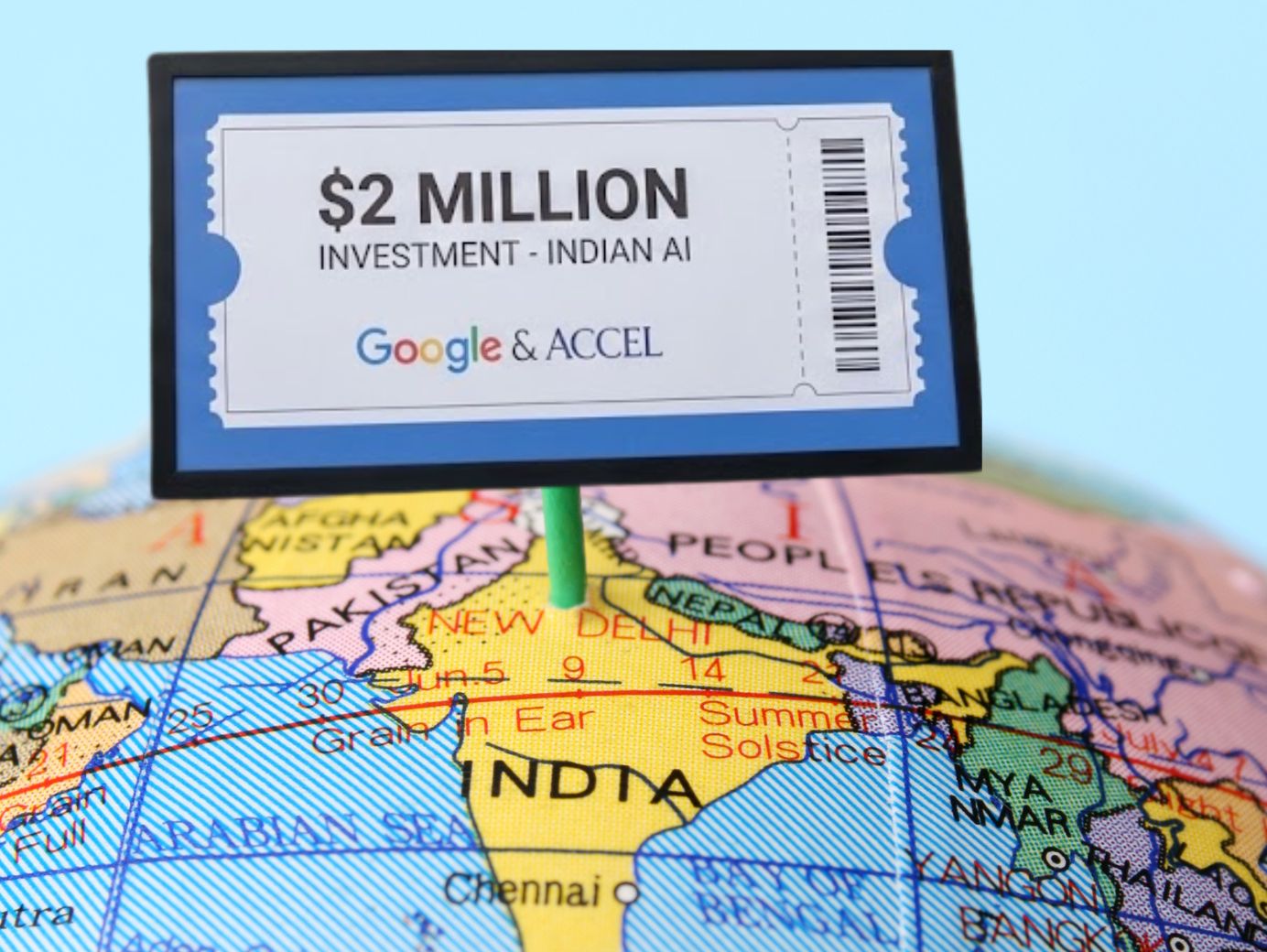
Google and Accel announced a partnership in Bengaluru that I frankly did not see coming in this specific format. They are joining forces to co-invest in early-stage Indian AI startups via the Accel Atoms 2026 Cohort and the Google AI Futures Fund.
This is not just a press release. It is a structural shift in the venture capital landscape. For the first time globally Google is engaging in a cohort-style funding collaboration. They are not doing this in Silicon Valley. They are not doing it in London. They are doing it here in India.
Whether you are a founder sketching ideas on a napkin in Indiranagar or a student at IIT Madras or a CTO looking to scale globally this partnership changes the calculus. We are talking about a $2 million ticket per startup combined with the kind of compute power and mentorship that usually costs equity you cannot afford to give away.
In this guide we will dismantle the deal and analyze the strict “No Wrapper” rule and provide a roadmap on how to position yourself to be one of the chosen 10.
Editor’s Choice: The Quick Verdict
For the busy founder who needs the bottom line immediately.
🔰 The Opportunity A combined **$2 Million investment** ($1M Accel + $1M Google) for early-stage Indian AI startups.
🎯 The Target Pre-seed to Series A startups in Generative AI, Healthcare, Coding/DevTools, and Creative Productivity.
⚠️ The Catch Zero tolerance for “Wrapper” startups. You must own your model fine-tuning, proprietary data, or unique workflow.
💡 The Strategy Do not pitch a chatbot. Pitch a vertical-specific solution that solves a structural problem using India’s data advantage.
⏳ Deadline Applications are open NOW through January 2026. link in the bottom
The Signal in the Noise
If you have been tracking the Indian tech ecosystem lately then you know the noise level is deafening. Every day brings a new LLM or a new “Copilot for X” or a new valuation that makes your eyebrows hit your hairline. But on November 25, 2025, amidst the noise, we got a signal. A massive one.
Google and Accel announced a partnership in Bengaluru that I frankly did not see coming in this specific format. They are joining forces to co-invest in early-stage Indian AI startups via the Accel Atoms 2026 Cohort and the Google AI Futures Fund.
This is not just a press release. It is a structural shift in the venture capital landscape. For the first time globally Google is engaging in a cohort-style funding collaboration. They are not doing this in Silicon Valley. They are not doing it in London. They are doing it here in India.
Whether you are a founder sketching ideas on a napkin in Indiranagar or a student at IIT Madras or a CTO looking to scale globally this partnership changes the calculus. We are talking about a $2 million ticket per startup combined with the kind of compute power and mentorship that usually costs equity you cannot afford to give away.
In this guide we will dismantle the deal and analyze the strict “No Wrapper” rule and provide a roadmap on how to position yourself to be one of the chosen 10.
The Anatomy of the Deal: More Than Just Cash
To be fair capital is abundant right now. If you have a decent AI pitch you can probably find an angel investor or a micro-VC in Bengaluru or Delhi-NCR. But “dumb money” or capital without connections is dangerous in the AI race because the technology moves too fast.
What Google and Accel have constructed here is a “Full Stack” support system. The $2 million headline is only half the story. The infrastructure is what actually de-risks your startup.
I have designed a breakdown of exactly what is on the table. You can visualize this as a “Founder’s Stack” which represents the layers of support you receive upon acceptance.
Analysis: The Founder’s Stack (Interactive Breakdown)
(Copy and paste the code below into your WordPress HTML block to render a colorful, mobile-responsive table)
HTML
<div style="font-family: 'Segoe UI', Tahoma, Geneva, Verdana, sans-serif; max-width: 100%; overflow-x: auto; margin: 20px 0; border-radius: 12px; box-shadow: 0 10px 25px rgba(0,0,0,0.1);">
  <table style="width: 100%; border-collapse: collapse; min-width: 600px;">
    <thead>
      <tr style="background: linear-gradient(90deg, #4285F4 0%, #34A853 100%); color: white; text-align: left;">
        <th style="padding: 18px 20px; font-size: 18px; font-weight: 700; border-top-left-radius: 12px;">Component</th>
        <th style="padding: 18px 20px; font-size: 18px; font-weight: 700;">Value / Amount</th>
        <th style="padding: 18px 20px; font-size: 18px; font-weight: 700; border-top-right-radius: 12px;">The "Human" Context</th>
      </tr>
    </thead>
    <tbody>
      <tr style="background-color: #f9fbfd; border-bottom: 1px solid #e0e0e0;">
        <td style="padding: 16px 20px; color: #202124; font-weight: 600;">
          <span style="display:inline-block; padding: 6px 12px; background-color: #e8f0fe; color: #1967d2; border-radius: 20px; font-size: 14px;">💰 Capital Injection</span>
        </td>
        <td style="padding: 16px 20px; font-size: 16px; font-weight: 700; color: #34A853;">$2 Million</td>
        <td style="padding: 16px 20px; color: #5f6368; line-height: 1.5;">Split equally. $1M from Google equity plus $1M from Accel equity. This provides an 18 to 24 month runway.</td>
      </tr>
      <tr style="background-color: #ffffff; border-bottom: 1px solid #e0e0e0;">
        <td style="padding: 16px 20px; color: #202124; font-weight: 600;">
          <span style="display:inline-block; padding: 6px 12px; background-color: #fce8e6; color: #c5221f; border-radius: 20px; font-size: 14px;">⚡ Compute Power</span>
        </td>
        <td style="padding: 16px 20px; font-size: 16px; font-weight: 700; color: #EA4335;">$350,000</td>
        <td style="padding: 16px 20px; color: #5f6368; line-height: 1.5;">Credits for Google Cloud and TPUs. In the AI world compute is oxygen. This covers heavy model training costs.</td>
      </tr>
      <tr style="background-color: #f9fbfd; border-bottom: 1px solid #e0e0e0;">
        <td style="padding: 16px 20px; color: #202124; font-weight: 600;">
          <span style="display:inline-block; padding: 6px 12px; background-color: #fef7e0; color: #ea8600; border-radius: 20px; font-size: 14px;">🧠 Intellectual Access</span>
        </td>
        <td style="padding: 16px 20px; font-size: 16px; font-weight: 700; color: #FBBC05;">Priceless</td>
        <td style="padding: 16px 20px; color: #5f6368; line-height: 1.5;">Direct access to Google DeepMind and Google Labs. You aren't just reading their papers. You are co-developing.</td>
      </tr>
      <tr style="background-color: #ffffff; border-bottom-left-radius: 12px; border-bottom-right-radius: 12px;">
        <td style="padding: 16px 20px; color: #202124; font-weight: 600;">
          <span style="display:inline-block; padding: 6px 12px; background-color: #f3e8fd; color: #8430ce; border-radius: 20px; font-size: 14px;">🤝 Mentorship</span>
        </td>
        <td style="padding: 16px 20px; font-size: 16px; font-weight: 700; color: #8430ce;">Strategic</td>
        <td style="padding: 16px 20px; color: #5f6368; line-height: 1.5;">Guidance from Accel partners who scaled Flipkart Swiggy and Freshworks.</td>
      </tr>
    </tbody>
  </table>
</div>
The “No Wrapper” Rule: A Deep Dive
Here is where I need to be blunt. In my analysis of the Accel Atoms AI Cohort 2026 criteria one condition stands out starkly. Startups must demonstrate original thinking.
We have seen a flood of “Wrapper Startups” in the last two years. These are companies that simply slap a user interface or UI on top of GPT-4 or Gemini and call it a product. This era is ending.
The Technical Difference: Wrapper vs Vertical AI
Why are Google and Accel rejecting wrappers? Because wrappers have no “moat” and no defensibility. If your product is just a prompt typed into OpenAI then Google can replicate your entire business model as a sidebar feature in Chrome next week.
1. The Wrapper (Avoid This)
- Concept: “LegalBot AI”
- Tech: Calls the Gemini API to summarize PDF contracts.
- Why it fails: It relies entirely on the base model’s general knowledge. It hallucinates. It has no unique data.
2. The Full-Stack Vertical AI (Build This)
- Concept: “ContractGuard for Indian Real Estate”
- Tech: Uses an open-source model like Llama or Gemma and fine-tunes it on 50,000 specific Indian property dispute court cases and integrates it into a proprietary workflow software.
- Why it wins: You own the fine-tuned weights. You own the workflow. You have data that the base model does not have.
Google and Accel are specifically looking for “Zero-to-One” product creation. They want founders who are leveraging India’s structural advantages. This includes massive datasets in healthcare and diverse linguistic data and complex logistics networks. They want you to solve problems that a generic model cannot solve.
Visualizing the Opportunity: Why Now?
To understand why this is happening now we need to look at the market trajectory. India is no longer just the back office of the world. It is becoming the AI lab of the world.
The AI Market Explosion (Projected)
This data highlights why global giants are rushing to secure equity in Indian firms.
- 2023 India AI Market: ~$4–5 Billion (Est.)
- 2027 India AI Market: $17 Billion (Projected by BCG)
- Global AI Spend 2026: $2 Trillion (Gartner)
The growth delta here is massive. By investing now Google and Accel are buying low into a market that is guaranteed to explode.
Why Google Chose India (The “Secret Sauce”)
You might ask “Why did Google choose India for its first global cohort?” It is not charity. From my experience analyzing global tech trends three factors make India the perfect storm for AI.
- The Data Advantage: AI eats data. India generates more digital data per capita than almost anywhere else thanks to the UPI revolution and cheap 5G.
- The Talent Density: We have the highest concentration of developers in the world. But more importantly we have developers who are hungry to build products and not just maintain code.
- The “Jugaad” Factor: This is often joked about but in AI efficiency matters. Indian founders are masters of doing more with less. They optimize token usage and reduce compute costs which is crucial for scalability.
Historical Reference: Think back to 2016. Reliance Jio launched and suddenly India went online. That created the foundation for companies like Zomato and Paytm to scale. This Google-Accel partnership is the “Jio Moment” for the AI sector.
Strategic Advice: How to Construct Your Pitch
If you are reading this and thinking “I need to apply” you cannot just send your standard pitch deck. You need to tailor it to this specific partnership.
Here are three things your pitch deck MUST highlight to get past the initial screening.
- The “Indian Nuance”: Show them why your solution works specifically in the Indian context or uses Indian data but scales globally.
- Example: An AI voice agent that understands “Hinglish” or mixed-dialect commands for rural banking.
- The Data Flywheel: Explain how your product gets smarter the more people use it. Investors love flywheels.
- Example: “Every time a doctor corrects our AI’s diagnosis the model retrains reducing the error rate by 0.5%.”
- The Technical Architect: Do not just show the CEO. Show who is building the model.Is it a Kaggle Grandmaster?] A former DeepMind engineer? A prodigious college dropout? Highlight the technical brain.
Application Guide: How to Secure Your Spot
If you are reading this and thinking, “I need to apply,” here is the tactical breakdown.
Eligibility Checklist:
- Stage: Pre-seed, Seed, or Early Series A.
- Founder Origin: Indian or Indian-origin founders (You can be based in Silicon Valley, but the DNA must be Indian).
- Sector Focus: Productivity, Healthcare, Coding, Creativity, Entertainment.
- Tech Stack: You do not need to be exclusive to Google Cloud currently, but you must be willing to leverage their ecosystem moving forward.
Timeline:
- Applications Open: NOW (November 2025)
- Deadline: January 2026
- Cohort Start: Q1 2026
Here’s the registration link or Accel Atoms — the application portal for the joint AI-startup programme with Google
Frequently Asked Questions (FAQs)
I scoured the forums and official press releases and founder communities to answer the most common questions regarding the Google-Accel partnership.
1. Do I need to be physically based in Bengaluru?
No but it helps. While the physical hub and events will center around Bengaluru the program is open to Indian founders globally. However the mentorship sessions are high-value and face-to-face interaction with Accel partners and Google engineers is often where the real magic happens. Expect to travel.
2. Is the $2 Million a convertible note or priced equity?
The specific terms can vary but typically Accel Atoms deals are equity investments. You are selling a portion of your company ownership to Google and Accel. This aligns their incentives with yours. They only make money if you exit via IPO or acquisition.
3. Does Google own my Intellectual Property (IP)?
Absolutely not. This is a critical distinction. You retain full ownership of your IP and your code and your model weights. Google is acting as a strategic investor not an acquirer. Their goal is to help you grow so you consume more Google Cloud services and potentially become an acquisition target later.
4. Can I use AWS or Azure if I get accepted?
Technically the program is “cloud agnostic.” However let us be realistic. You are receiving $350,000 in Google Cloud credits. Financially and strategically it makes zero sense to pay for AWS when you have free and high-performance compute from Google. The expectation is that you will build on the Google stack which includes Gemini and Vertex AI.
5. What stages are eligible?
The sweet spot is Pre-seed to Series A.
- Pre-seed: You have a prototype and a team but maybe no revenue.
- Seed: You have some users and early traction.
- Series A: You are looking to scale.
- Note: If you are just an “idea on paper” without a technical co-founder it will be very hard to get in.
This partnership is a validation of the Indian startup ecosystem. $2 million is a lot of money but the signal is worth more. It tells the world that the next OpenAI or Anthropic could very well come out of Hyderabad or Pune or Bengaluru.
Explore more exclusive startup insights, founder stories, and AI innovations at BestStartup.India.