

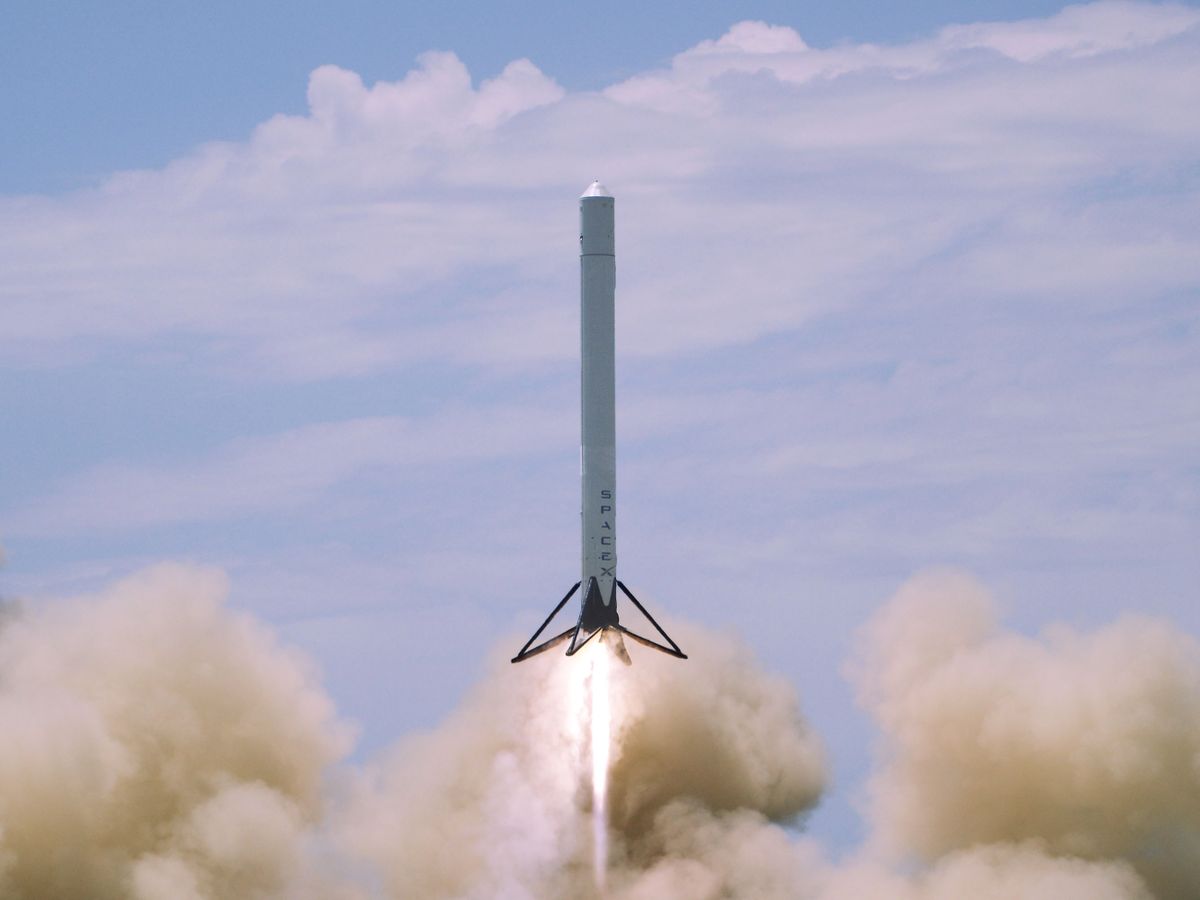
The Skyroot Aerospace founders’ journey is one of conviction, sacrifice, and scientific brilliance. When Pawan Kumar Chandana and Naga Bharath Daka resigned from the Indian Space Research Organisation in 2018 to build India’s first private rocket company, many in the industry were sceptical. Eight years later, on July 18, 2026, their Vikram-1 rocket lifted off from Sriharikota, reached orbit on its maiden attempt, and made India the third country in the world — after the United States and China — to have a private player capable of orbital launches.
Key Highlights
- Founded: 2018 by former ISRO scientists
- Founders: Pawan Kumar Chandana (CEO) and Naga Bharath Daka (COO)
- Headquarters: Hyderabad, Telangana
- Historic achievement: India’s first private company to reach orbit on a maiden attempt
- Vikram-1 orbit: 450 km altitude, 60-degree inclination
- Launch site: Satish Dhawan Space Centre, Sriharikota
- PM Modi called personally to congratulate the founders
The Founding Story
The story of Skyroot Aerospace begins inside ISRO, India’s national space agency. Pawan Kumar Chandana spent years as a systems engineer working on the LVM3 — ISRO’s most powerful rocket, the one that carried Chandrayaan missions to the Moon. Naga Bharath Daka was a specialist in avionics and electronics, the nervous system of any launch vehicle.
Both men were deeply passionate about space. But they were also watching a global transformation unfold from within government walls. In the United States, SpaceX had proven that private companies could build rockets faster and more ambitiously than any government programme. In 2018, India passed its new space policy framework that, for the first time, allowed private companies to operate in the launch vehicle space.
Chandana and Daka saw the opening. They resigned from ISRO — a decision that raised eyebrows — and founded Skyroot Aerospace in June 2018 in Hyderabad. They named their rocket after Vikram Sarabhai, the visionary scientist widely regarded as the father of the Indian space programme.
Founder Profiles — Pawan Kumar Chandana and Naga Bharath Daka
Pawan Kumar Chandana is the co-founder and CEO of Skyroot Aerospace. Before founding Skyroot, he worked at ISRO on the LVM3 rocket, with expertise spanning propulsion systems and launch vehicle design. His engineering background and leadership have driven Skyroot’s fundraising, regulatory navigation, and overall strategic direction. He described the Vikram-1 launch as “a once in a lifetime opportunity.”
Naga Bharath Daka is the co-founder and COO of Skyroot Aerospace. His expertise in avionics and electronics — the systems that guide a rocket through its trajectory, manage stage separations, and communicate with ground control — has been central to Vikram-1’s technical development. His team’s work on guidance and control systems was instrumental in Mission Aagaman’s success.
Company Overview
Skyroot Aerospace is a Hyderabad-based private space launch company focused on small satellite launch vehicles. The company’s product line is built around the Vikram series of rockets — modular, configurable launch vehicles designed to carry payloads ranging from a few kilograms to several hundred kilograms into low Earth orbit, sun-synchronous orbit, and geosynchronous transfer orbit.
Unlike ISRO’s rockets designed for large institutional payloads, Skyroot’s Vikram series targets the fast-growing small satellite market. Skyroot is backed by leading investors including Lightspeed India Partners and Blume Ventures, and has achieved unicorn status as one of India’s most valuable space startups.
Vikram-1 Launch — Mission Aagaman Details
On July 18, 2026, Vikram-1 lifted off from the First Launch Pad at the Satish Dhawan Space Centre in Sriharikota, Andhra Pradesh. The rocket performed flawlessly, reaching an orbital altitude of 450 kilometres at a 60-degree inclination and successfully deploying all four payloads onboard.
The mission, named Mission Aagaman — meaning “arrival” in Sanskrit — marked the beginning of India’s private orbital launch era. Skyroot became the first private Indian company to place a rocket into orbit on its maiden orbital attempt, an extraordinarily rare accomplishment in global spaceflight history.
Mission Aagaman Payloads
Vikram-1 carried four payloads into orbit:
- Grahaa Space — technology demonstration satellite from the Bengaluru-based space startup
- Cosmoserve — payload from an Indian space technology company
- DCubed — a European space technology firm specialising in deployable mechanisms
- SCOPE — Skyroot’s own in-house satellite, demonstrating end-to-end capability from rocket to payload
The Road to Launch — Eight Years of Perseverance
The journey from founding to orbit took eight years. In November 2022, Skyroot became the first private Indian company to launch a rocket into space when Vikram-S, a single-stage suborbital test vehicle, lifted off in Mission Prarambh (meaning “beginning”). That mission proved the company’s propulsion technology and provided critical flight data.
Skyroot built several propulsion technologies in-house, including its Kalam engine family named after former President Dr. APJ Abdul Kalam. The Department of Space and IN-SPACe provided regulatory clearance and launch site access, reflecting the Indian government’s commitment to enabling a private space sector.
Why This Matters for India
The Skyroot Aerospace founders’ journey is not just a corporate success story — it is a national milestone. India joining the United States and China as the only countries with private orbital launch capability is a geopolitical and economic statement of the highest order. Prime Minister Narendra Modi called Pawan Chandana and Bharath Daka personally to congratulate them after the launch.
For India’s space ecosystem, the implications are profound. A proven private launch provider means Indian satellite companies no longer need to rely solely on ISRO or foreign launchers to reach orbit, building domestic resilience and establishing India as a credible player in the global commercial space industry.
Market Opportunity
The global small satellite launch market is one of the fastest-growing segments of the space economy, with more than 10,000 small satellites planned for launch over the next decade. India’s cost advantage in engineering and manufacturing, combined with Skyroot’s proven technology and ISRO’s world-class launch infrastructure, positions Skyroot to compete aggressively for a share of this global market.
Future Roadmap
Following Vikram-1’s success, Skyroot plans to begin commercial launch operations with Vikram-1, develop the larger Vikram-2 vehicle for heavier payloads, scale to multiple launches per year, and compete for international small satellite launch contracts against SpaceX Transporter missions and other rideshare providers.
Conclusion
The Skyroot Aerospace founders’ journey from ISRO engineers to leaders of India’s first private orbital launch is one of the defining startup stories of the decade. Pawan Kumar Chandana and Naga Bharath Daka did not just build a rocket — they built an industry. Vikram-1’s success on Mission Aagaman has written India into the history books of private spaceflight, and it has opened a new commercial frontier for the country’s most ambitious entrepreneurs and engineers.
Sources: Via Satellite | Bharat Economic Forum
Follow BestStartup India
If you enjoyed this startup founder story, follow us for daily startup news, founder journeys, venture capital updates, and the latest technology breakthroughs from India and around the world. Visit BestStartup India for more.
Frequently Asked Questions
Who are the founders of Skyroot Aerospace?
Skyroot Aerospace was founded in 2018 by Pawan Kumar Chandana (CEO) and Naga Bharath Daka (COO), both former scientists at ISRO — India’s national space agency.
What is Vikram-1 and what did it achieve?
Vikram-1 is Skyroot Aerospace’s orbital launch vehicle. On July 18, 2026, it successfully reached a 450 km orbit on its maiden attempt during Mission Aagaman, making India the third country after the US and China to have a private player capable of orbital launches.
Where was Vikram-1 launched from?
Vikram-1 lifted off from the First Launch Pad at the Satish Dhawan Space Centre in Sriharikota, Andhra Pradesh — India’s primary rocket launch facility.
What payloads did Vikram-1 carry on Mission Aagaman?
Mission Aagaman carried four payloads: satellites from Grahaa Space, Cosmoserve, DCubed (a European firm), and Skyroot’s own SCOPE satellite.
What is Skyroot Aerospace’s future plan after Vikram-1?
Skyroot plans to offer regular commercial launch services using Vikram-1, develop the larger Vikram-2 vehicle, and compete for international small satellite launch contracts to grow India’s role in the global commercial space market.
Who are the founders of Skyroot Aerospace?
Skyroot Aerospace was founded in 2018 by Pawan Kumar Chandana (CEO) and Naga Bharath Daka (COO), both former scientists at ISRO — India’s national space agency.
What is Vikram-1 and what did it achieve?
Vikram-1 is Skyroot Aerospace’s orbital launch vehicle that successfully reached a 450 km orbit on its maiden attempt during Mission Aagaman on July 18, 2026, making India the third country after the US and China to have a private player capable of orbital launches.
Where was Vikram-1 launched from?
Vikram-1 lifted off from the First Launch Pad at the Satish Dhawan Space Centre in Sriharikota, Andhra Pradesh — India’s primary rocket launch facility.
What payloads did Vikram-1 carry on Mission Aagaman?
Mission Aagaman carried four payloads: satellites from Grahaa Space, Cosmoserve, DCubed (a European firm), and Skyroot’s own SCOPE satellite.
What is Skyroot Aerospace’s future plan after Vikram-1?
Skyroot plans to offer regular commercial launch services using Vikram-1, develop the larger Vikram-2 vehicle, scale to multiple launches per year, and compete for international small satellite launch contracts to grow India’s role in the global commercial space market.