
September 2026 arrived with a statement. In the first seven days of the month, India startup funding in the first seven days of September crossed $277 million across 22 funding rounds spanning space technology, healthtech, fintech, D2C beauty, D2C footwear, battery innovation, deep tech aerospace, and enterprise AI. The week did not have one dominant story. It had six of them — each from a different sector, each backed by a different thesis, and each pointing toward a different corner of what India’s startup ecosystem is becoming in 2026.
Stay ahead of every India startup funding story at BestStartup India.
India Startup Funding September 1 to 7 2026 at a Glance
Total raised: over $277 million across 22 verified rounds. Sectors covered: space tech, healthtech, digital banking, D2C beauty, D2C footwear, battery swapping, aerospace deep tech, enterprise voice AI, power electronics, and industrial deep tech. Largest round: Pixxel at $100 million. Most surprising: Navana.ai at Rs 40 crore backed by Ronnie Screwvala. Most anticipated: Slice at $100 million as it relaunches as a full digital bank.
According to Tracxn data, India has raised $14.9 billion across 1,410 equity rounds in 2026 through September — fewer rounds, larger cheques, and more proven companies winning the capital. India now has 132 unicorns and 743,779 registered companies in the ecosystem.
Pixxel Raises $100 Million Series C — India’s Biggest Space Tech Round Ever
The headline of this week’s India startup funding is Pixxel’s $100 million Series C announced on September 7. The round was co-led by Temasek and Seraphim, with new investors 360 ONE Asset and South Korea’s IMM Investment joining alongside existing backers Radical Ventures and growX Ventures. Total funding now stands at $195 million — the best-capitalised private space technology company in Indian history.
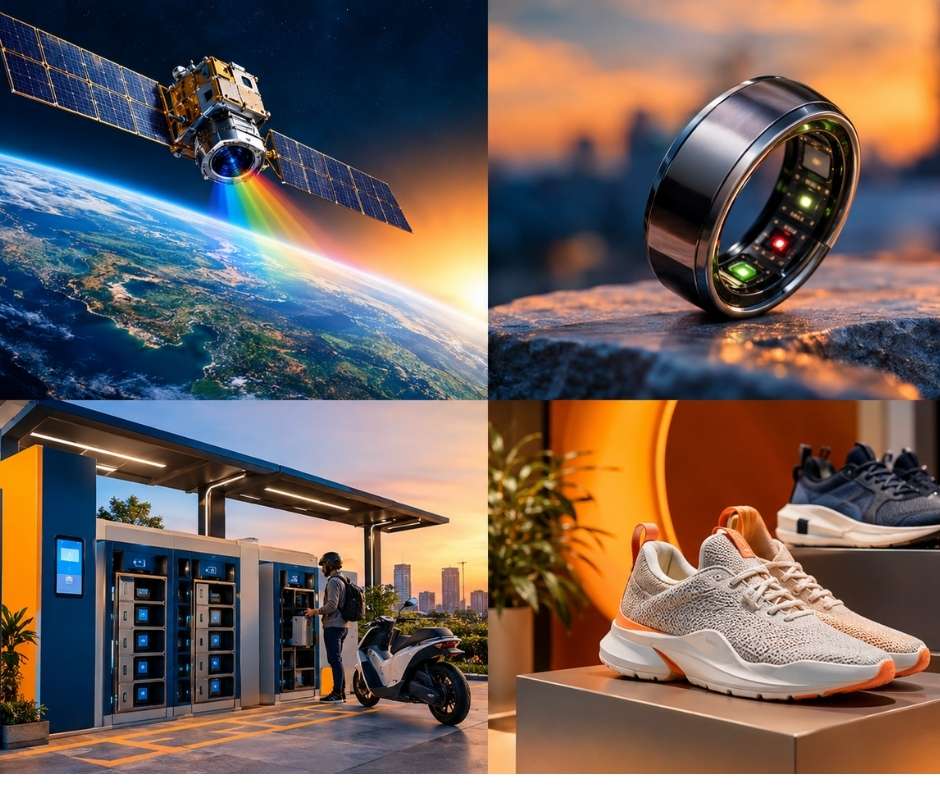
Pixxel was founded in 2019 by Awais Ahmed and Kshitij Khandelwal in Bengaluru. The company builds hyperspectral satellites that capture information about Earth’s surface far beyond conventional optical imagery. Where a standard satellite camera sees colour, a hyperspectral satellite sees chemistry — detecting crop disease before it is visible, identifying mineral deposits, monitoring industrial emissions, and tracking environmental changes across thousands of square kilometres simultaneously.
The $100 million will fund expansion of the Honeybee satellite constellation, development of the Aurora software platform, and scaling of the Gigapixxel manufacturing facility. Temasek’s co-lead signals that Pixxel has crossed from technology development into commercial viability. This is the largest private funding round ever in India’s space technology sector according to APAC Media.
Ultrahuman Raises $70 Million — Smart Rings Become Health Computers
In this week’s India startup funding, Bengaluru-based Ultrahuman raised $70 million in fresh funding from Qualcomm Ventures, Labcorp, Alpha Wave, Blume Ventures, Nexus Venture Partners, and Alteria Capital. Founded by Mohit Kumar and Vatsal Singhal, Ultrahuman makes the Ring AIR — a smart ring that continuously monitors blood glucose trends, sleep quality, heart rate variability, recovery scores, and metabolic performance.
The Qualcomm Ventures participation implies deeper semiconductor integration into future hardware. Labcorp’s investment — from one of the world’s largest clinical laboratory networks — implies clinical validation partnerships that could make Ultrahuman’s data medically relevant rather than consumer wellness-adjacent. The $70 million will expand research across sensing technologies, artificial intelligence, miniaturised electronics, health algorithms, and clinical research.
Slice Raises $100 Million — India’s Most Watched Fintech Becomes a Digital Bank
The India startup funding week also saw Slice raise $100 million in a Series D from Neo Wealth Management and five additional investors. Founded by Rajan Bajaj, Slice has undergone one of the most significant strategic transformations in Indian fintech in 2026 — merging with North East Small Finance Bank and building toward a full digital banking licence. The round signals that the market believes the integrated digital bank model is viable and valuable.
India’s digital banking market is projected to reach $1.3 trillion in transaction value by 2030. Slice’s decision to pursue a banking licence rather than remaining a fintech overlay positions it to capture a share of that market that pure-play lending apps cannot access. This is the first major external raise since the merger. Read more India fintech stories at BestStartup India.
SUGAR Cosmetics Raises Rs 144 Crore — The D2C Valuation Reset Story
SUGAR Cosmetics raised Rs 144.47 crore from A91 Partners through allotment of 1.12 lakh Series D7 CCPS at Rs 12,871 per share. Founded by Vineeta Singh and Kaushik Mukherjee, SUGAR was last valued at approximately $400 million in 2022. The current raise implies a significantly lower valuation — a reset that reflects the broader correction in D2C startup valuations and the 2026 shift from growth-at-any-cost to profitable growth.
SUGAR has genuine retail presence, genuine customer loyalty, and genuine product quality. A91 Partners believes the reset price is attractive enough to double down. Early investors are reportedly exploring exits at considerable discounts to peak valuations — a pattern visible across Indian D2C in 2026.
Comet Raises Rs 100 Crore Series B — India Wants Its Own Sneaker Brand
Comet raised Rs 100 crore from Verlinvest, Elevation Capital, Nexus Venture Partners, and angel investors. Founded in 2023 by Utkarsh Gupta and Dishant Daryani, the D2C sneaker brand is making an explicit play for the Indian lifestyle footwear category historically dominated by Nike, Adidas, and Puma.
India’s urban young adults have cultural references, aesthetic preferences, and purchasing power that Western brands do not fully address. Comet is building a brand that speaks to that audience from within their own context. The investor lineup — Verlinvest’s consumer brand expertise, Elevation Capital’s India knowledge, and Nexus’s product-building track record — gives Comet a board that has seen this category succeed in multiple markets globally.
Yuma Energy Raises $35 Million Series A — Battery Swapping Gets Institutional Backing
Yuma Energy raised $35 million in a Series A led by Magna International — one of the world’s largest automotive suppliers — on September 1. The round came alongside Yuma’s acquisition of battery technology company Grinntech. Yuma operates battery swapping stations for electric two and three-wheelers. A depleted battery is replaced with a charged one in under two minutes — critical for commercial drivers who cannot afford slow-charge downtime.
Magna International’s $17 billion revenue makes its lead investment strategically significant — it is exploring India’s EV infrastructure as a growth market, not just a financial investment. The Grinntech acquisition gives Yuma control of its battery chemistry alongside its swapping network, improving both margins and technical differentiation. Follow India’s EV startup stories at BestStartup India.
Navana.ai Raises Rs 40 Crore — Ronnie Screwvala Backs Sovereign Voice AI
Navana.ai raised Rs 40 crore in a Series A led by Ronnie Screwvala with participation from Sharad Sanghi, Antler India, Sandeep Singhal, and Paula Mariwala. Navana.ai builds voice AI for regulated enterprises — banks, insurance companies, and healthcare providers — that cannot use general-purpose consumer voice AI platforms. Its sovereign voice AI runs within the client’s own infrastructure with no conversation data passing through foreign servers or externally trained models.
The Rest of the Week — Deep Tech, Aerospace, and Clean Air
Kepler Aerospace raised $8 million in a seed round led by Blue Ashva Capital for spacetech. Aeron Systems raised Rs 45 crore in a Pre-Series B from Riverwalk Holdings and MGF-Kavachh for aerospace and defence navigation deep tech. Zenergize raised $4 million for power electronics. Minimac Systems raised Rs 30 crore for industrial deep tech. YOGa Clean Air raised funding for clean air technology. Cradlewise raised in smart baby monitoring. The breadth of sectors in one week reflects a maturing ecosystem where deep tech is no longer concentrated exclusively in consumer internet and fintech.
What This Week Tells Founders About India’s Funding Market
Three patterns define this week of India startup funding from September 1 to 7. First, proof beats promise at every stage — every large round had commercial validation behind it, not just a pitch deck. Second, D2C valuations have reset — SUGAR’s round at a lower valuation than 2022 is a message every D2C founder must understand. Third, India’s deep tech pipeline is deepening — a week with three space or aerospace deep tech rounds would have been exceptional a year ago. In September 2026 it is the baseline.
Follow every India startup funding story, every founder profile, and every weekly India startup funding update, and every investment trend at BestStartup India.
Key Takeaways
Pixxel raised $100 million Series C — India’s largest ever space tech private round — led by Temasek and Seraphim. Total funding now $195 million. Ultrahuman raised $70 million from Qualcomm Ventures, Labcorp, Alpha Wave, Blume, and Nexus. Slice raised $100 million Series D as India’s next full digital bank. SUGAR Cosmetics raised Rs 144 crore from A91 Partners in a valuation reset round. Comet raised Rs 100 crore Series B from Verlinvest, Elevation Capital, and Nexus. Yuma Energy raised $35 million from Magna International and acquired Grinntech. Navana.ai raised Rs 40 crore backed by Ronnie Screwvala for sovereign voice AI. Total week: $277 million-plus across 22 rounds spanning 10 sectors.
Frequently Asked Questions
What was the biggest Indian startup funding round in the first week of September 2026?
Pixxel’s $100 million Series C announced September 7 was the largest round of the week and the largest private funding round in India’s space technology sector in history. Co-led by Temasek and Seraphim with total funding reaching $195 million.
How much did Indian startups raise in the first week of September 2026?
Indian startups raised over $277 million across 22 verified funding rounds between September 1 and September 7 2026 spanning space tech, healthtech, fintech, D2C, battery swapping, deep tech aerospace, enterprise AI, power electronics, and clean air technology.
What is Pixxel and why did it raise $100 million?
Pixxel is a Bengaluru spacetech startup founded in 2019 by Awais Ahmed and Kshitij Khandelwal. It builds hyperspectral satellites that capture Earth intelligence beyond conventional imaging. The $100 million Series C will fund satellite constellation expansion, the Aurora software platform, and the Gigapixxel manufacturing facility.
What is Ultrahuman and why is its $70 million raise significant?
Ultrahuman is a Bengaluru health intelligence company making the Ring AIR smart ring for continuous metabolic, sleep, and cardiovascular monitoring. Its $70 million raise is significant because Qualcomm Ventures and Labcorp participated — implying semiconductor integration and clinical validation partnerships that could make its data medically relevant.
What is sovereign voice AI and why does Navana.ai matter?
Sovereign voice AI runs within a client’s own infrastructure with no conversation data passing through foreign servers. Navana.ai builds this for Indian regulated enterprises — banks, insurance companies, healthcare providers — that cannot use consumer AI platforms. It raised Rs 40 crore in a Series A led by Ronnie Screwvala.
What does SUGAR Cosmetics’ valuation reset mean for Indian D2C startups?
SUGAR raised Rs 144 crore at a significantly lower valuation than its 2022 peak of $400 million. This reflects a broader recalibration where 2026 investors prioritise profitable growth over scale. D2C founders who accept realistic valuations are getting funded. Those holding out for 2021 multiples are not.
Where can I follow Indian startup funding news every week?
Follow the complete Indian startup funding landscape every week at BestStartup India — every round, every founder, every trend across every sector.