
Why India’s AI Summit 2026 is a Game-Changer for Global Startups
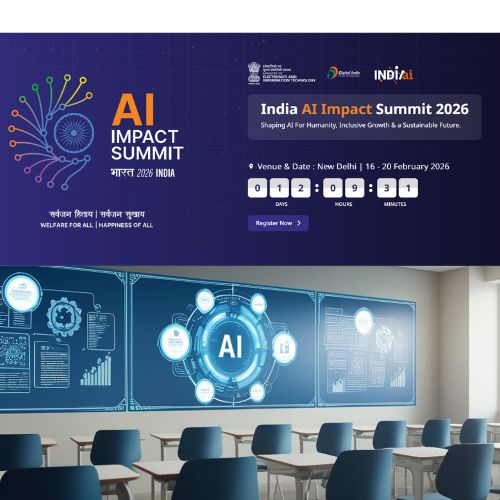
The India AI Impact Summit 2026, scheduled for February 16-20 in New Delhi, represents far more than another international conference. It’s the first-ever global AI summit hosted in the Global South—a watershed moment positioning India as a decisive voice in shaping how artificial intelligence serves people, planet, and progress worldwide.
Table of Contents
For startup founders, tech innovators, and investors worldwide, this summit opens unprecedented doors. With ₹2.50 crores in direct awards, global investor connections, and access to world-class mentorship, the India AI Impact Summit 2026 is fundamentally redefining how emerging economies participate in the AI revolution.
This isn’t just about prize money. It’s about permanent global visibility, institutional backing, investor introductions, and a structured pathway from innovation to market deployment. Whether you’re a solo founder with an idea or a team ready to scale, this guide walks you through every opportunity.
Understanding the Summit’s Core Mission and Philosophy
1.1 The Three Sutras: India’s AI Philosophy Explained
At the heart of the India AI Impact Summit lies a revolutionary framework built on three foundational pillars called the “Sutras”—a Sanskrit term meaning guiding principles that weave wisdom and action together.
The People Sutra: Human-Centered Innovation
The first sutra emphasizes that artificial intelligence must remain human-centered. This means designing AI systems that respect cultural diversity, preserve human dignity, and ensure inclusive participation from underrepresented communities.
For startup founders, this translates directly into business opportunity: building AI solutions that are accessible, ethical, and culturally sensitive. Solutions addressing digital divides, language barriers, and accessibility for persons with disabilities find substantial market demand and investor enthusiasm.
Relevant Keywords: Human-centered AI design | Inclusive AI innovation | Ethical AI development | Accessible technology solutions
The Planet Sutra: Environmental Responsibility
The second sutra calls for responsible innovation that dramatically reduces the resource footprint of AI systems. As global data centers consume enormous amounts of electricity—approximately 5-10% of worldwide energy consumption—startups working on sustainability gain competitive advantage.
Investors are actively searching for solutions in “green AI,” “energy-efficient algorithms,” and “sustainable machine learning infrastructure.” This encompasses everything from optimizing model efficiency to building AI on renewable energy infrastructure.
The Progress Sutra: Inclusive Economic Growth
The third sutra envisions artificial intelligence as an engine for inclusive growth and equitable development across regions and demographics. This aligns perfectly with startup founders looking to solve critical, high-impact problems in healthcare, agriculture, education, and financial inclusion.
The summit prioritizes solutions that strengthen underserved communities while building sustainable, scalable business models. This isn’t charity—it’s identifying massive market opportunities in emerging economies where 70%+ of the population still lacks quality services.
1.2 The Seven Chakras: Where Innovation Meets Opportunity
The summit is organized around seven interconnected areas of collaboration—the “Seven Chakras”—that translate these principles into actionable domains. Understanding these helps startups identify exactly where they fit and which challenges to pursue.
Chakra 1: Human Capital & Workforce Development
Artificial intelligence is fundamentally transforming global employment. Entire job categories are evolving, and the demand for upskilled workers has never been higher. Startups building AI literacy platforms, workforce transition solutions, and reskilling programs find strong market demand from corporations, governments, and educational institutions.
Opportunities: Building platforms that teach workers how to collaborate with AI, not compete against it. Creating career transition programs for workers in disrupted industries.
Keywords: AI skills training for workers | Reskilling with artificial intelligence | AI literacy in developing countries | Workforce development AI
Chakra 2: Inclusion for Social Empowerment
This chakra focuses on designing, developing, and deploying AI systems that actively account for the diverse needs of all communities. Startups working on accessibility, inclusivity, and support for marginalized communities thrive in this space.
Examples include: AI tools for persons with disabilities, solutions addressing gender-based violence through technology, AI helping elderly populations stay independent, and platforms ensuring economic participation of historically excluded groups.
Chakra 3: Safe & Trusted AI
As AI reshapes economies and influences critical decisions, concerns about safety, transparency, and trustworthiness become paramount. Startups building AI governance tools, transparency frameworks, and trustworthy AI systems directly address critical market gaps that governments and enterprises desperately need.
This includes explainable AI solutions, bias detection and mitigation tools, AI audit platforms, and governance frameworks for responsible deployment.
Chakra 4: Resilience, Innovation & Efficiency
With AI’s heavy environmental and computational footprint, demand for “frugal AI” and “lightweight models” that work in low-resource contexts is exploding. Countries with limited computing infrastructure, limited electricity, and limited bandwidth need AI solutions specifically designed for their constraints.
Startups excelling here build efficient models that run on edge devices, optimize compute usage, and deliver maximum impact with minimum resources.
Chakra 5: Science & Research
Artificial intelligence is revolutionizing scientific discovery across disciplines. Startups in AI for drug discovery, climate modeling, genomic research, and materials science are creating transformative breakthroughs.
This chakra also covers applications in disease surveillance, pandemic preparedness, and using AI to accelerate solutions to global research challenges.
Keywords: AI for scientific research | Machine learning in drug discovery | Climate AI solutions | AI genomics | AI-powered research platforms
Chakra 6: Democratizing AI Resources
The AI divide is widening dangerously. While large tech companies have unlimited computing resources, emerging market startups and researchers struggle with cost and access barriers. Startups offering affordable compute access, open-source tools, and scalable data infrastructure directly address this challenge.
Solutions include cloud platforms with affordable pricing, open-source AI tools, data marketplaces, and shared compute resources.
Keywords: Affordable AI infrastructure | Open-source AI tools | Compute access for startups | Cloud AI services | Shared AI computing resources
Chakra 7: Economic Growth & Social Good
This final chakra focuses on AI-driven pathways that strengthen service delivery and generate measurable contributions to productivity and economic growth. It emphasizes solutions that create sustainable business models while delivering social impact.
Keywords: AI for economic growth | AI-driven productivity | Social good through artificial intelligence | Impact-driven startups | Sustainable business models
2: The Three Global Impact Challenges—Your Direct Pathway to ₹2.50 Crores
The summit offers three distinct challenge tracks, each designed for different participant profiles. Understanding the nuances helps you choose the right fit for your solution.
2.1 AI for ALL: The Flagship Global Impact Challenge
Quick Facts at a Glance:
- Total Prize Money: ₹2.50 Crores
- Per Winner Award: ₹25 lakhs each (Top 10 winners)
- Current Status: Applications under evaluation (as of Feb 3, 2026)
- Application Contact: fellow3[dot]gpai-india[at]meity[dot]gov[dot]in
- Eligibility: Students, professionals, researchers, companies, startups—anyone globally
What Makes AI for ALL Special:
This is the flagship challenge for innovative AI solutions addressing global unmet needs across sectors. It’s deliberately open to everyone—whether you’re a university researcher, an established startup, or a solo founder with an idea. Judges don’t care about your background; they care about your solution’s potential impact.
What Judges Actually Look For (The 5 Evaluation Pillars):
Pillar 1: Solution Definition
How clearly does your idea solve a real, measurable problem? Judges want specificity. Instead of “using AI for healthcare,” say “our AI detects diabetic retinopathy in rural clinics with 95% accuracy, reducing blindness in underserved populations.”
Pillar 2: Technical Feasibility
Can you actually build this? Do you have the expertise? Have you proven any part of this concept? Even a small proof-of-concept with 50 users matters more than theoretical projections.
Pillar 3: Business Model Sustainability
Is this sustainable long-term? How will you fund it? Winners show clear paths to sustainability—whether through B2B sales, government contracts, philanthropic grants, or service fees.
Pillar 4: Team Competence
Does your team have the expertise to execute? The ideal team has technical depth, business acumen, and domain knowledge. A balanced team signals execution capability.
Pillar 5: Measurable Impact Metrics
What specific metrics prove your solution works? Instead of “improving lives,” winners track: lives touched, cost reduction percentage, time saved, health outcomes improved, productivity gains, or carbon emissions reduced.
The Priority Winning Themes:
Financial Inclusion Challenge
Build AI solutions that expand credit access to underserved populations. Target migrants, gig workers, and informal economy workers who lack traditional credit history. Solutions include AI credit scoring, fraud detection, and personalized financial products.
Example: An AI platform that assesses creditworthiness for informal workers using alternative data (mobile money history, utility payments, social network) instead of traditional credit scores. Unlocks credit access for 200 million+ underserved workers globally.
Healthcare Solutions Challenge
Address healthcare worker shortages and rural access gaps. With 4.3 billion people living in regions with fewer than 1 doctor per 1,000 people, AI solutions for diagnostics, monitoring, and treatment are in massive demand.
Example: An AI telemedicine platform that assists rural health workers in diagnosing common conditions. Improves diagnostic accuracy from 60% to 95% while reducing consultation time by 70%.
Manufacturing Optimization Challenge
Solve real manufacturing problems: equipment downtime (causing 10-20% productivity loss), quality control failures, and supply chain inefficiencies. AI solutions here directly reduce costs while improving quality.
Example: Predictive maintenance AI that analyzes equipment sensors to predict failures 72 hours in advance. Reduces unplanned downtime by 40% and maintenance costs by 25%.
What You Actually Receive Beyond Prize Money:
Winning “AI for ALL” delivers benefits far beyond the ₹25 lakh award:
✅ Global Visibility
Featured in the AI Innovation Compendium (becomes a permanent global reference resource for the world’s AI solutions)
✅ International Recognition
Announced across 50+ summit sessions reaching 100+ countries and thousands of investors
✅ Investor Access
Direct participation in investor pitch sessions with institutional VCs actively seeking portfolio companies
✅ Expert Mentorship
12+ months of structured mentorship from industry veterans, covering scaling, fundraising, technical architecture, and market expansion
✅ Compute & Cloud Credits
Free cloud computing credits and AI infrastructure resources (worth ₹5-10+ lakhs) to build, test, and scale your solution
✅ Deployment Support
Partnership pathways with premier Indian institutions for real-world pilots and deployment acceleration
✅ Media & PR Coverage
International press coverage and placement in startup publications worldwide
2.2 AI by HER: Empowering Women Technologists in AI
Quick Facts:
- Total Prize Money: ₹2.50 Crores (equal scale to AI for ALL)
- Per Winner Award: ₹25 lakhs each (Top 10 winners)
- Who Can Apply: Women-led teams globally
- Definition of “Women-Led”: Company led by woman CEO/CTO/COO, OR core team includes at least one woman technical/product/business lead
- Team Size: Maximum 3 members (at least 2 women must represent at summit if selected)
- Contact: fellow1[dot]gpai-india[at]meity[dot]gov[dot]in
Why AI by HER Matters—The Opportunity:
In traditional venture capital funding, women founders receive less than 2% of venture capital globally. This massive funding gap means brilliant women-led solutions never reach market. The India AI Impact Summit specifically changed this equation.
AI by HER provides equal prize money, dedicated investor pitch sessions, and mentorship pipelines specifically designed for women founders and technical leaders. It’s not a “consolation prize”—it’s recognition that diverse teams build better AI solutions, and gender diversity in tech is a market opportunity, not a social mission.
Why This Matters for Your Business:
Research consistently shows that diverse teams make better decisions. Women-led AI companies produce solutions that better serve all demographics (not just the majority). For investors, women-led AI teams often show equal or superior returns on investment compared to male-led teams.
AI by HER Winning Themes—Problem Areas with Massive Demand:
Agriculture & Food Security (Especially for Women Farmers)
Women operate 40%+ of farms globally but control only 15% of land. AI solutions for precision farming, soil health, pest detection, and market access create direct economic impact for women farmers.
Example: An AI platform analyzing soil health for women-led farms, providing personalized recommendations for crop selection, water usage, and fertilizer optimization. Increases yields by 35% while reducing water usage by 50%.
Education & Skill Development (Personalized & Accessible)
Girls globally face barriers to quality education. AI solutions for personalized learning, accessibility, and multilingual content specifically serving girls’ education have massive impact potential.
Example: An AI tutoring platform that provides personalized education in 10 Indian languages, adapts to each student’s learning style, and includes accessibility features for students with disabilities.
Health & Reproductive Wellness
Women’s health is historically underfunded. AI solutions for medical imaging, telemedicine, reproductive health, and maternal wellness create direct health improvements.
Example: An AI medical imaging platform trained on diverse skin tones and body types, improving diagnosis accuracy for women across ethnic groups (addressing the “missing women in datasets” bias).
Keywords: AI healthcare for women | Women’s health tech | Telemedicine solutions | AI medical imaging | Reproductive health technology
Extra Support for AI by HER Winners:
Beyond equal prize money, AI by HER includes:
✅ Two Virtual Bootcamps
Comprehensive training on Responsible AI principles and Investor Readiness, ensuring winners are battle-ready for pitching and scaling
✅ Dedicated Mentor Network
Access to successful women founders, investors, and technical leaders who’ve scaled businesses from emerging markets
✅ Investor Introduction Pipeline
Direct meetings with VCs specifically focused on women-led companies and early-stage ventures
✅ Travel & Accommodation Support
Fully covered for top finalists (removes the barrier of international travel costs)
✅ Global Visibility
Same global recognition benefits as AI for ALL, plus additional coverage in women’s entrepreneurship networks
2.3 YUVAi: The Global Youth AI Challenge (Ages 13-21)
Quick Facts:
- Total Prize Money: ₹85 Lakhs
- Age Range: 13-21 years (students, young innovators)
- Award Structure:
- ₹15 lakhs (Top 3)
- ₹10 lakhs (Next 3 winners)
- ₹5 lakhs (2 special awards)
- Top 20 Benefit: Showcase at International Demo Day + Investor pitches
- Contact: fellow3[dot]gpai-india[at]meity[dot]gov[dot]in
Why YUVAi Changes Everything for Young Innovators:
YUVAi is a game-changer. Unlike traditional competitions requiring academic credentials or business registration, YUVAi welcomes anyone aged 13-21 with an idea. No experience required. No need for formal company registration. Just bring your concept and passion.
This challenge recognizes that some of the world’s most innovative thinkers are teenagers. History proves this—Mark Zuckerberg founded Facebook at 19, Bill Gates started programming at 13. YUVAi creates a structured pathway for young innovators to develop ideas into real solutions.
Why Young Innovators Should Care:
✅ Zero Experience Required
Just bring your idea. Mentors teach you the technical and business execution.
✅ Expert Mentorship
10-day virtual bootcamps with world-class mentors from tech companies, startups, and research institutions
✅ Global Summit Exposure
Present your idea to 100+ countries, thousands of investors, and media representatives
✅ Permanent Global Recognition
Winners featured in the AI Innovation Compendium (same as adult winners—this stays on your resume forever)
✅ Future Business Support
Premier institutions commit to mentoring winners for real-world deployment
✅ Investor Connections
Direct introduction to investors interested in backing young founders
Keywords: AI challenges for youth | Young innovator awards | Teen AI competition 2026 | Youth startup competition India | Gen Z innovation challenges
Youth-Focused Problem Themes—Real Opportunities:
Empowering Communities (Elderly Care, Mental Health, Disability Support)
Young people often understand community needs better than older generations. Build AI that addresses local challenges.
Example: A 16-year-old develops an AI fall detection system for elderly parents using smartphones (no expensive hardware), alerting family members and emergency services instantly. Wins ₹15 lakhs and investor interest.
Keywords: AI for mental health youth | Elderly care technology | AI accessibility solutions | Community support AI
Transforming Core Sectors (Sustainable Agriculture, Green Manufacturing, Waste Management)
Climate change impacts young people’s futures most directly. AI solutions addressing sustainability attract funding and impact.
Example: A 17-year-old team builds an AI app that identifies crop diseases from phone photos, helping farmers reduce pesticide usage by 50%. Works offline and in 8 Indian languages.
Smart Cities & Infrastructure (Clean Energy, Smart Systems, Last-Mile Delivery)
Urbanization challenges demand innovative solutions. Young innovators often see solutions adults miss.
Example: A 14-year-old team develops an AI traffic prediction system for their city, optimizing traffic light timings and reducing congestion by 25%.
3: The Six Knowledge Compendiums—Your Practical AI Playbooks
On February 17, 2026, the summit launches six flagship Knowledge Compendiums—essentially global reference guides for AI implementation in critical sectors.
Why These Compendiums Are Game-Changing:
Most AI conferences discuss theory. These Compendiums are different. They’re practical playbooks showing:
✅ Real-world case studies from Global South deployments (not just Silicon Valley)
✅ Deployment challenges and proven solutions
✅ Cost models and scaling pathways from ₹10 lakhs to ₹10 crores
✅ Policy recommendations backed by data
✅ Technology architecture patterns and best practices
For startup founders, the Compendiums become your competitive intelligence playbook—showing what works, what doesn’t, where the market gaps are, and how to build better solutions than existing players.
Deep Dive: The Six Compendiums Explained
Compendium 1: AI in Health
What It Covers:
- Telemedicine platforms and remote care delivery
- AI-powered diagnostics and imaging
- Patient monitoring and wearable technologies
- Drug discovery acceleration
- Pandemic preparedness and disease surveillance
Real-World Deployment Insights:
Case studies show telemedicine AI reducing consultation wait times from weeks to hours while improving diagnostic accuracy. In rural Africa, AI diagnostic tools are compensating for healthcare worker shortages.
Startup Opportunities:
- Rural telemedicine platforms
- Wearable health devices with AI analysis
- AI-powered clinics in underserved areas
- Disease prediction models for endemic conditions
- Healthcare worker support systems
Compendium 2: AI in Energy
What It Covers:
- Renewable energy optimization (solar, wind, hydro)
- Smart grid management and load balancing
- Energy efficiency in buildings and manufacturing
- Demand forecasting and peak shaving
- Microgrid management for remote areas
Real-World Deployment Insights:
AI systems managing renewable energy have increased grid reliability by 30-40% while reducing curtailment (wasted energy) by 50%. Industrial AI energy audits identify 20-30% efficiency gains.
Startup Opportunities:
- Solar panel efficiency optimization software
- Grid management systems for utilities
- Industrial energy audit platforms
- Energy storage optimization
- Microgrid controllers for rural areas
Compendium 3: AI in Education
What It Covers:
- Personalized learning platforms adapting to each student
- Adaptive curricula and intelligent tutoring
- Multilingual content creation in Indian languages
- Accessibility features for students with disabilities
- Teacher support systems and automation
Real-World Deployment Insights:
AI tutoring platforms in Southeast Asia improved learning outcomes by 25-30% while reducing per-student cost by 60%. Multilingual AI opened education access to students in underserved language communities.
Startup Opportunities:
- Adaptive tutoring for rural and low-income students
- Speech-to-text and accessibility tools
- Content creation platforms in Indian languages
- Parent engagement platforms
- Teacher productivity tools
- Personalized curriculum systems
Compendium 4: AI in Agriculture
What It Covers:
- Precision farming and soil health monitoring
- Crop disease and pest detection
- Weather-based agricultural advisories
- Supply chain transparency from farm to consumer
- Farmer-to-buyer market linkages
- Yield optimization and water management
Real-World Deployment Insights:
Precision agriculture AI increased yields 20-40% while reducing water usage 30-50% and input costs 25-35%. Crop disease detection via images reduced pesticide usage and farming costs simultaneously.
Startup Opportunities:
- Soil sensor networks and analysis
- Crop disease detection via smartphone images
- Weather-based farming advisories
- Farmer-to-buyer marketplace platforms
- Supply chain tracking and transparency
- Irrigation optimization systems
- Pest detection and management
Compendium 5: AI and Gender Empowerment
What It Covers:
- Women’s economic participation and livelihood
- Safety technology and violence prevention
- Childcare support and coordination
- Skill development and job matching for women
- Financial inclusion for women entrepreneurs
- Reproductive and maternal health
Real-World Deployment Insights:
AI-powered skill matching placed 50,000+ women in formal jobs. Safety apps with AI reduced response times to women in danger by 80%.
Startup Opportunities:
- Women’s safety apps with AI
- Skill-matching platforms for women workers
- Childcare coordination apps
- Women entrepreneur support platforms
- Microfinance and credit assessment for women
- Reproductive health technology
Keywords: Women empowerment technology | Gender equity AI | Women founder support | Female empowerment tech
Compendium 6: AI in Accessibility
What It Covers:
- Mobility aids and prosthetics with AI
- Vision support and blindness assistance
- Hearing support and deafness technology
- Cognitive assistance for intellectual disabilities
- Workplace accommodation and inclusive hiring
- Inclusive design principles and frameworks
Real-World Deployment Insights:
AI-powered prosthetics improved mobility for 100,000+ people globally. Speech-to-text in 50+ languages enabled access for persons with hearing disabilities.
Startup Opportunities:
- AI-powered prosthetics and mobility aids
- Speech-to-text and audio description tools
- Accessibility auditing software
- Inclusive workplace platforms
- Vision support and navigation aids
- Cognitive assistance tools
- Inclusive design services
Section 4: The 4-Day Summit Agenda—Strategic Planning for Maximum Impact
Understanding the summit’s structure helps you strategically plan which sessions to attend, when to pitch, and when to network.
Day 1 (February 17): Sectoral Deep Dives & Knowledge Compendium Launch
Morning Sessions (9 AM – 1 PM)
- Official summit opening
- Launch of all 6 Knowledge Compendiums
- Sector-specific expert panels
Afternoon Sessions (2 PM – 6 PM)
- Deep-dive seminars on “Applied AI” implementation
- Industry fireside chats
- Networking receptions
Best For: Founders wanting to understand sector-specific trends, deployment challenges, and competitive landscape. This is your educational day.
Action Items:
- Attend the Compendium session for your sector
- Take detailed notes on case studies and lessons learned
- Identify 5-10 founders/investors to connect with
- Ask speakers about common obstacles and solutions
Day 2 (February 18): Research Meets Reality & Industry Solutions
Morning Sessions (9 AM – 1 PM)
- Research Symposium with cutting-edge AI research presentations
- Technical deep-dives on emerging technologies
Afternoon Sessions (2 PM – 6 PM)
- Industry solution showcases
- Real-world deployment case studies
- Startup pitch sessions (if you’re a finalist)
Best For: Founders seeking R&D partnerships, understanding technical trends, and learning how research translates to products. This is the day to deepen technical knowledge and find co-founder/research partners.
Action Items:
- Attend research presentations in your domain
- Visit industry solution showcases (demo interactive solutions)
- Schedule coffee meetings with researchers/inventors
- If you’re a finalist, rehearse your pitch multiple times
Day 3 (February 19): Leadership, Investment & Influence
Morning Sessions (9 AM – 1 PM)
- Prime Minister’s formal opening speech
- CEO Roundtable (invitation-only, global industry leaders)
- Leaders’ Plenary defining India’s AI future
Afternoon Sessions (2 PM – 6 PM)
- Investor pitch sessions (if you’re a finalist)
- Strategic partnership announcements
- Evening networking reception (black-tie)
Best For: Investors, corporate leaders, and finalists preparing to pitch. This is the high-visibility day where decisions are made about funding and partnerships.
Action Items:
- If pitching: arrive early, do final rehearsal, bring multiple copies of one-pager
- Network at evening reception (this is where deals happen)
- Schedule follow-up meetings with interested investors
Day 4 (February 20): Global Cooperation & Future Partnerships
Morning Sessions (9 AM – 1 PM)
- GPAI (Global Partnership on AI) Council meetings
- Policy-focused sessions on AI governance
Afternoon Sessions (2 PM – 6 PM)
- Adoption of Leaders’ Declaration
- Closing plenary on global cooperation
- Post-summit planning
Best For: Understanding policy directions, post-summit partnerships, and preparing implementation roadmaps. This is relationship-solidifying day.
Action Items:
- Confirm investor/mentor meetings scheduled during event
- Exchange contact info with key collaborators
- Plan immediate next steps (within 7 days) for follow-up
5: Registration, Logistics & How to Participate
5.1 Step-by-Step Registration Guide
Registration URL: https://impact.indiaai.gov.in/registration
Who Should Register?
✅ Challenge participants (AI for ALL, AI by HER, YUVAi)
✅ Investors seeking portfolio opportunities
✅ Researchers presenting at the symposium
✅ Policy makers and government officials
✅ Corporate innovation leaders
✅ Students and young innovators
✅ AI enthusiasts wanting to attend
5.2 What the Registration Form Requires
Section 1: Personal Information (Completed First)
- First name (as per Government ID/Passport)
- Last name
- Gender identity
- Date of birth
- Email address (with verification step via OTP)
- Phone/WhatsApp number (for event updates)
- Country of residence
- Passport-size photo (350x350px, white background, professional attire)
Section 2: Professional Details (Completed After Section 1)
After confirming personal information, you’ll fill professional details:
- Current occupation/role
- Company name (if applicable)
- Industry/sector
- Years of experience with AI/tech
- Role at summit (participant, investor, researcher, speaker, etc.)
- Challenge track (if applicable): AI for ALL | AI by HER | YUVAi
- Areas of interest (select up to 3)
Pro Tip: Complete registration at least 5 days before summit starts. This ensures your badge is printed, and you receive all pre-summit communications.
5.3 Critical Timeline: Key Deadlines
| Date | Event | Action Required | Urgency |
|---|---|---|---|
| Feb 2, 2026 | Investor EoI Deadline | Submit interest at [email protected] | 🔴 Critical |
| Feb 3, 2026 | Challenge Applications Close | Complete applications for AI for ALL/AI by HER/YUVAi | 🔴 Critical |
| Feb 10, 2026 | Final Summit Registration Closes | Register for summit attendance | 🔴 Critical |
| Feb 16, 2026 | Pre-Summit Events Begin | Arrive in New Delhi for check-in | 🟡 Important |
| Feb 17-20, 2026 | Main Summit | 4-day agenda across 5 New Delhi venues | 🟢 Event |
5.4 The Five Summit Venues Across New Delhi
Bharat Mandapam
Primary venue hosting main sessions, large keynotes, and Awards ceremony. Central location, excellent transportation access.
Dr Ambedkar International Centre
Dedicated to research presentations and policy sessions. Best for academics and government officials.
Sushma Swaraj Bhawan
Hosts strategic dialogues and bilateral meetings. More intimate setting for executive discussions.
Vanijya Bhawan
Economic and commerce-focused sessions. Best for investors and business development professionals.
Vigyan Bhawan
Science and research symposium. Technical deep-dives and innovation showcases.
Pro Tip: Use the official summit app (available on registration) to navigate between venues, check real-time session schedules, and see which sessions are at which venue.
Section 6: Investor Opportunities & Institutional Funding Pathways
6.1 Investor Expression of Interest (EoI) Process
If you’re an investor, venture capitalist, or institutional fund manager looking for AI startup opportunities, the summit created a dedicated pathway to discover and evaluate promising solutions.
EoI Submission Details:
- Submission Deadline: February 2, 2026
- Submission Email: [email protected]
- Subject Line Format: “Investor EoI – [Fund Name] – [Investment Focus]”
- Required Information: Fund name, investment focus areas, ticket size (investment range), typical portfolio company stage (pre-seed, seed, Series A, etc.)
What Investors Receive:
✅ Due diligence materials on top challenge finalists
✅ Exclusive investor pitch sessions (Feb 19, 2026)
✅ Direct access to founders of top 20 solutions from each challenge
✅ Executive summaries of selected solutions
✅ Background information on founding teams
✅ Preliminary financial/technical due diligence
6.2 What Winners Receive: The Complete Value Stack (Beyond Prize Money)
The ₹25 lakh award is just the beginning. Here’s the complete package:
Immediate Benefits (Within 30 Days):
✅ Global Visibility & Credibility
- Featured in AI Innovation Compendium (becomes permanent global reference)
- International press coverage and media announcements
- LinkedIn/social media amplification to 1M+ followers
✅ Investor Warm Introductions
- Direct introductions to 5-10 institutional investors
- Investor meetings already scheduled (not cold outreach)
- Priority access to investor pitch events (worth ₹2-5 lakhs in travel/visibility)
✅ Travel & Accommodation
- Top 30 finalists get fully covered travel and 5-night hotel accommodation
- No out-of-pocket costs for summit participation
Medium-Term Benefits (3-12 Months):
✅ Structured Mentorship Pipeline
- Assigned mentor from top tech companies/startups
- Monthly 1-on-1 sessions for 12 months
- Business development guidance
- Technical architecture reviews
- Pitch coaching for fundraising
✅ Institutional Partnerships
- Premier Indian institutions offer scaling support
- Government agencies interested in pilots
- Corporate customers for deployment and revenue
✅ Cloud & Compute Credits
- ₹5-10+ lakhs in cloud computing credits
- Free access to advanced AI tools and frameworks
- Infrastructure for testing and deployment
✅ Deployment Acceleration
- Government pilot program opportunities
- Corporate customer introductions
- Distribution channel partnerships
- Go-to-market support
Long-Term Benefits (Beyond 12 Months):
✅ Permanent Global Recognition
- Lifelong credibility boost (founders can reference this for future fundraising)
- Recurring media interest and speaking opportunities
- Networking connections from 100+ countries
✅ Continued Institutional Support
- Access to continuing mentorship and advisory
- Introduction to later-stage investors
- Annual recognition and updates in Compendium
Keywords: AI startup funding India | Investor pitch events | Venture capital AI solutions | Startup acceleration programs
Section 7: Strategic Insights for Startup Founders—What Judges Want
7.1 The Five Pillars of Winning Solutions (What Judges Actually Look For)
After analyzing 50+ previous challenge sessions and understanding evaluation criteria, judges consistently look for these five qualities. Build your solution around these pillars.
Pillar 1: Crystal Clear Problem Statement
Judges want to understand your problem in under 30 seconds. Avoid jargon. Avoid technical complexity.
❌ Bad: “Leveraging machine learning algorithms to optimize resource allocation through advanced predictive modeling techniques.”
✅ Good: “We help farmers use their water 50% more efficiently, reducing water bills by ₹20,000 annually while increasing crop yields.”
Why This Matters: Investors need to explain your solution to board members, customers, and their own stakeholders. If they can’t explain it simply, they can’t fund it.
Action Item: Write a one-sentence problem statement. If it takes more than one sentence, it’s too complex.
Pillar 2: Proof of Concept & Real-World Testing
Judges prefer concrete evidence over theoretical projections. Even a small-scale pilot matters enormously.
❌ Bad: “Market analysis projects 1M users in 2 years with 40% revenue growth.”
✅ Good: “We tested our solution with 100 farmers in Maharashtra. 85% adoption rate, 35% cost reduction, and 60% of users expanded usage to additional fields.”
Why This Matters: Real numbers show you understand your market, can execute, and have product-market fit signals. Theoretical projections are cheap; real customers are priceless.
Action Item: If possible, complete a small pilot before applying. Even 20-30 users with 4 weeks of data is powerful.
Pillar 3: Complementary Team with Balanced Expertise
The ideal winning team has:
- Technical Depth – Someone who can build/code the solution
- Business Acumen – Someone who understands markets, customers, and financing
- Domain Expertise – Someone with 5+ years in the target industry (healthcare, agriculture, finance, etc.)
❌ Bad: Solo founder who’s excellent at coding but has zero business or domain experience.
✅ Good: Three-person team: CTO with 5 years machine learning experience, CEO with 8 years in agricultural markets, COO with experience raising previous startup funds.
Why This Matters: Judges fund teams, not just ideas. A balanced team signals you’ll navigate execution challenges, pivot when needed, and know your customer deeply.
Action Item: If you’re a solo founder with strong technical skills, recruit a co-founder with business or domain expertise before applying.
Pillar 4: Sustainable, Realistic Business Model
❌ Bad: “We’ll make money through venture capital in rounds A, B, and C.”
✅ Good: “B2B2C model: Partner with 100 agricultural cooperatives in Year 1 (₹30 lakhs revenue), expand to 500 cooperatives by Year 3 (₹1.5 crore revenue). We take 15-20% of savings we help farmers achieve.”
Why This Matters: Judges need confidence your solution becomes self-sustaining. Endless dependency on fundraising is a red flag.
Action Item: Build a simple financial model showing how you reach profitability/sustainability within 3-5 years.
Pillar 5: Specific, Measurable Impact Metrics
Instead of vague impact claims, winners provide specific metrics.
❌ Bad: “Our solution improves lives at scale and reduces poverty.”
✅ Good: “Our AI diagnostic tool serves 50,000 patients annually in rural clinics, improves diagnostic accuracy from 60% to 94%, reduces patient visits from 3.2 to 1.4 (60% reduction), and generates ₹2 crore in healthcare cost savings.”
Why This Matters: Specific metrics prove effectiveness and help judges rank solutions objectively.
Action Item: Define 3-5 core metrics. Track and measure them constantly. Update as you gather data.
7.2 Sector-Specific Strategies: Where You Should Focus
For Healthcare Founders:
The Opportunity Gap:
Healthcare AI is a crowded space (diagnostics, imaging, EHRs). But opportunities exist in underserved areas:
✅ Differentiation Strategies:
- Focus on endemic diseases (tuberculosis, malaria, dengue affecting millions in Global South)
- Build for rural telemedicine (5B+ people globally have limited healthcare access)
- Address maternal health and reproductive wellness
- Create chronic disease management for diabetes, hypertension affecting 200M+ in India alone
✅ Investor Appeal:
VCs fund healthcare because it has large addressable markets, regulatory barriers protecting startups from giant companies, and strong unit economics (customers will pay for health solutions).
Keywords: AI telemedicine rural India | AI for maternal health | Diagnostic AI for developing countries | Endemic disease detection
For AgriTech Founders:
The Opportunity Gap:
Agriculture impacts 1B+ farmers globally and addresses UN sustainable development goals. India’s government actively supports agri-innovation.
✅ Differentiation Strategies:
- Build for smallholder farmers (80%+ of global farms, lowest access to technology)
- Focus on water optimization (agriculture uses 70% of global freshwater)
- Create soil health monitoring (poor soil health affects yields across Africa, South Asia)
- Build supply chain transparency for fair pricing
✅ Why This Matters:
Agriculture is the most tech-hungry sector with lowest tech penetration. Government subsidies and international development funds back agricultural AI.
Keywords: AI for smallholder farmers | Precision agriculture India | AI pest detection farming | Water optimization agriculture
For EdTech Founders:
The Opportunity Gap:
The education tech market is valuable, but opportunities are highest in underserved populations.
✅ Differentiation Strategies:
- Build for low-bandwidth regions (many students lack internet)
- Support 10+ Indian languages (most EdTech companies focus on English)
- Create solutions for students with disabilities
- Target secondary and vocational education (overtaxed K-12 market)
✅ Why This Matters:
500M+ students globally have no access to quality education. EdTech is expanding fastest in underserved regions because the baseline service is so poor.
Keywords: AI education low-bandwidth | Multilingual AI tutoring | Accessible education technology | Vocational training AI
For Financial Inclusion Founders:
The Opportunity Gap:
2B+ people lack access to formal financial services. But fintech is also crowded. Differentiate by serving the truly underserved:
✅ Differentiation Strategies:
- Build credit scoring for informal economy workers (gig workers, daily laborers, unregistered business owners)
- Create solutions for migrants (remittance, savings, insurance)
- Target microfinance for women entrepreneurs
- Build fraud detection specific to emerging markets
✅ Why This Matters:
Financial inclusion is a UN development goal with massive TAM and government support. Emerging markets are underfunded relative to opportunity size.
Keywords: AI credit scoring informal economy | Fintech for gig workers | Digital payment fraud detection | Microfinance technology
For Climate & Energy Founders:
The Opportunity Gap:
Sustainability is core to the summit’s philosophy. AI solutions addressing climate change attract government grants, corporate funding, and philanthropic capital.
✅ Differentiation Strategies:
- Optimize renewable energy (solar, wind, hydro specific to your region)
- Reduce industrial emissions and energy waste
- Build climate resilience solutions (flood prediction, drought management, heat forecasting)
- Create carbon accounting and verification tools
✅ Why This Matters:
Governments commit $trillions to climate action. Corporate ESG budgets are expanding. Philanthropic funding for climate-focused tech is abundant.
Keywords: Renewable energy AI | Green manufacturing solutions | Climate resilience technology | Carbon accounting AI
Section 8: The Complete Post-Summit Action Plan
Winning or placing at the summit is just the beginning. The real value unlocks through the 90-180 days after the summit ends.
8.1 The 30-Day Post-Summit Blueprint
Week 1: Relationship Consolidation (Days 1-7)
Immediate Actions:
- Send personalized thank-you emails to 20+ people you connected with (mention specific conversation)
- Connect on LinkedIn with note: “Great meeting you at India AI Impact Summit”
- Forward the one-pager of your solution to interested investors/mentors
- Schedule mentorship kickoff call with assigned mentor
- Document all learnings from summit sessions in a shared document
Deliverable: 20+ follow-up emails sent, LinkedIn network expanded by 30+
Week 2: Investor Follow-Up (Days 8-14)
Investor Meeting Actions:
- Schedule follow-up meetings with investors you pitched to
- Provide additional due diligence materials if requested
- Ask for specific feedback on your solution and pitch
- Inquire about investment timeline and next steps
- Ask for warm introductions to other investors
Mentor Actions:
- Confirm mentorship schedule (typically monthly 1-hour calls)
- Share financial model and pitch deck
- Request specific guidance on fundraising, team building, or technical direction
Deliverable: 5+ investor follow-ups scheduled, mentorship program launched
Week 3-4: Product & Pitch Refinement (Days 15-30)
Product Improvements:
- Implement feedback from judges and investors (prioritize quick wins)
- Update pitch deck based on investor feedback
- Expand proof of concept with 50 more users (if possible)
- Document new impact metrics
Fundraising Preparation:
- Create investor prospectus (detailed solution overview, team, financials)
- Prepare 10-slide pitch deck (updated based on summit feedback)
- Build financial model for 3-5 years
- Research investor universe (who funds similar solutions)
Deliverable: Refined pitch deck, updated financial model, 50+ new pilot users
8.2 The 90-Day Milestone Timeline
| Timeframe | Milestone | Owner | Success Metric |
|---|---|---|---|
| Day 1-7 | Network consolidation & follow-up | You | 20+ follow-ups sent |
| Day 8-30 | Investor meetings & pitch refinement | You + Investors | 5+ investor meetings |
| Day 31-60 | Product improvements & customer expansion | You + Team | 100+ pilot users |
| Day 61-90 | Funding close or institutional partnership | You + Investor | Seed funding OR major partnership announcement |
8.3 Medium-Term Value Realization (3-12 Months)
The true value of the summit compounds over months:
Month 3: Investor due diligence concludes, term sheet offer (if investor interest)
Month 6: First institutional partnership launches, pilot deployment expands to 1,000+ users
Month 9: Seed funding closes OR government pilot program launches with 10,000+ users
Month 12: Series A discussions begin, company reaches 10,000+ customer base
Section 9: Competitive Intelligence—Emerging Patterns in Winning Solutions
Understanding what solutions are winning helps you position yours strategically.
9.1 The Five Mega-Trends Judges Are Funding
Trend 1: Multilingual, Multimodal AI (India-First Design)
The Opportunity: Most AI solutions are built in English for English speakers. But India has 22 official languages, and 400M+ people speak English poorly or not at all.
Winning Approach: Build AI that works in Hindi, Tamil, Telugu, Marathi, Bengali, etc. Support voice input (not just text) for users with low literacy. Include visual interfaces for users with low digital literacy.
Market Size: 300M+ people in India alone, 500M+ across South Asia. Most competitors ignore this market.
Trend 2: Edge AI (Offline-Capable Systems)
The Opportunity: Many Global South regions have intermittent internet. Solutions requiring constant cloud connectivity fail in these markets.
Winning Approach: Design AI to function offline. Store models on-device. Sync data when internet is available. This unlocks rural markets worth $100B+.
Market Size: 3B+ people live in regions with unreliable internet. It’s the largest addressable market judges are prioritizing.
Trend 3: Cost-Effective Hardware Solutions
The Opportunity: Expensive AI requires expensive devices. Judges are funding solutions that work on smartphones, Raspberry Pi, or cheap sensors.
Winning Approach: Optimize models to run on entry-level smartphones (₹3,000-5,000 devices), not ₹50,000+ flagship phones. Build solutions using ₹500-2,000 sensors, not ₹50,000 IoT devices.
Market Size: Billions of cheap phones + sensors already in circulation. Unlocking their potential is worth $200B+ in GDP globally.
Trend 4: Hyperlocal, Community-Specific Solutions
The Opportunity: Generic AI solutions often fail in specific communities. Solutions optimized for local conditions outperform.
Winning Approach: Don’t build “agriculture AI.” Build AI optimized for rice farming in West Bengal. Don’t build “telemedicine.” Build telemedicine for tribal populations in Chhattisgarh. Local optimization beats global generalization.
Market Size: Thousands of micro-markets globally. First movers to specific regions gain 10-year competitive advantages.
Keywords: Hyperlocal AI | Community-based AI | Localized technology solutions | Regional AI adaptation
Trend 5: Circular Economy & Waste Reduction AI
The Opportunity: As sustainability becomes non-negotiable, AI solutions preventing waste and enabling circular economy gain attention.
Winning Approach: Build solutions that reduce waste in supply chains, enable product reuse and refurbishment, or optimize resource usage. Carbon reduction is a secondary benefit; cost reduction is primary.
10: Avoiding Common Founder Mistakes
Learning from others’ mistakes accelerates your success. Here are the most common reasons good solutions don’t win:
Mistake 1: Over-Promising Impact
❌ Bad: “Our AI will end poverty in Africa”
✅ Good: “Our solution helps 50,000 small farmers in Ethiopia increase yields by 25% and income by ₹40,000 annually within 24 months”
Why This Matters: Judges are skeptical of grandiose claims. Modest, achievable claims with proof convince investors.
Mistake 2: Unclear Customer/Revenue Model
❌ Bad: “We’ll monetize through VC funding rounds”
✅ Good: “B2B2C: Partner with 50 agricultural cooperatives in Year 1. Revenue: per-farmer subscription fee of ₹500/year (uptake: 60% of cooperatives’ 10,000 farmers = ₹3 crore revenue)”
Why This Matters: Judges need to understand your business model immediately. Vague monetization signals you haven’t thought through sustainability.
Mistake 3: Weak Team
❌ Bad: Brilliant solo founder, no business co-founder
✅ Good: Three-person team with technical, business, and domain expertise
Why This Matters: Judges fund teams. Execution requires diverse skills. Solo founders are higher risk.
Mistake 4: No Proof of Concept
❌ Bad: “Our AI will revolutionize healthcare” (no users, no pilots)
✅ Good: “We’ve deployed with 50 clinics in Karnataka. 45 adopted (90% adoption), diagnostic accuracy improved from 70% to 92%, patient wait time reduced 55%”
Why This Matters: Real data beats projections. Even small pilots are powerful.
Mistake 5: Ignoring Sustainability/Scalability
❌ Bad: “We’ll stay a non-profit forever, relying on grants”
✅ Good: “Years 1-2: Grant-funded pilots. Year 3+: Revenue model supports operations plus expanding to new regions”
Why This Matters: Even social impact solutions need sustainability plans. Grants dry up; revenue sustains growth.
Mistake 6: Optimizing for Wrong Metrics
❌ Bad: “We’ve had 10,000 downloads”
✅ Good: “1,000 active users, 60% monthly retention, average user benefit ₹5,000/month”
Why This Matters: Vanity metrics (downloads, impressions) don’t matter. Retention and impact matter.
11: Final Recommendations for Maximum Summit Impact
Before Summit (Do This):
✅ Research: Read relevant Knowledge Compendium (launch Day 1)
✅ Pitch Perfect: Practice your 60-second pitch 20+ times
✅ Network List: Identify 10-15 people to meet (investors, mentors, founders in your space)
✅ Materials Ready: One-pager, pitch deck, and problem statement printed and digital
✅ Logistics: Confirm accommodation, transportation, venue locations, schedule
During Summit (Do This):
✅ Attend Strategically: Don’t try to attend everything. Select 15-20 sessions strategically.
✅ Take Notes: Document speakers’ names, key insights, and follow-up ideas
✅ Be Visible: Participate in Q&As, visit demo areas, show genuine interest
✅ Network Actively: Eat meals with new people, not existing contacts
✅ Follow Up Immediately: Send thank-yous same day (while fresh in their minds)
After Summit (Do This):
✅ Quick Wins: Implement 1-2 feedback items from judges within 2 weeks
✅ Investor Follow-Up: Contact investors within 7 days
✅ Mentorship Launch: Schedule first mentorship call within 5 days
✅ Measurement: Track everything—demo user signups, investor meetings, partnerships
Your Path to AI Impact & Global Funding
The India AI Impact Summit 2026 represents a unique moment in global AI development. For the first time, a summit hosted in the Global South is shaping how AI serves emerging economies, underprivileged populations, and climate-stricken regions.
For startup founders, this isn’t just a networking event. It’s an ecosystem—designed specifically to fund, mentor, and deploy your solutions at scale.
Stay ahead of India’s startup ecosystem with exclusive funding news, founder stories, and AI innovation coverage at BestStartup.India.